Let Us Know How We Can Help. We Are Your Dedicated Solutions Provider.

For global buyers, selecting the right Astm A572-50 Steel I-Beams requires more than comparing prices. This guide examines practical buying factors for 2026, including yield strength, beam dimensions, weight tolerance, surface condition, and supply reliability. ASTM A572 Grade 50 steel is commonly valued for its higher strength and efficient structural performance. However, the final choice must match the project’s loads, connection details, design code, and local engineering requirements.
Real purchasing experience shows that small specification gaps can create expensive delays. A beam may look acceptable in photographs, yet mill-test data could reveal unsuitable chemistry or inconsistent mechanical results. Verify heat numbers, certificates, ultrasonic testing records, and dimensional measurements before shipment. Check flange width, web thickness, straightness, and cutting accuracy. These details matter at the fabrication floor.
Not every supplier deserves equal confidence. Experienced buyers should compare traceability, production capacity, inspection methods, packaging, and export history. Ask for recent test reports, not generic samples. Confirm whether the quoted grade, length, and finish are actually available. Delivery estimates can change. That deserves honest attention.
Some projects may need painted, galvanized, or bare surfaces, depending on exposure and construction practice. Coating requirements should be agreed before production. Packaging also matters when beams travel through humid ports or face repeated handling. This article presents a practical comparison of leading 2026 options, while recognizing one limitation: market availability varies by region and season. Independent engineering review remains essential before purchase.
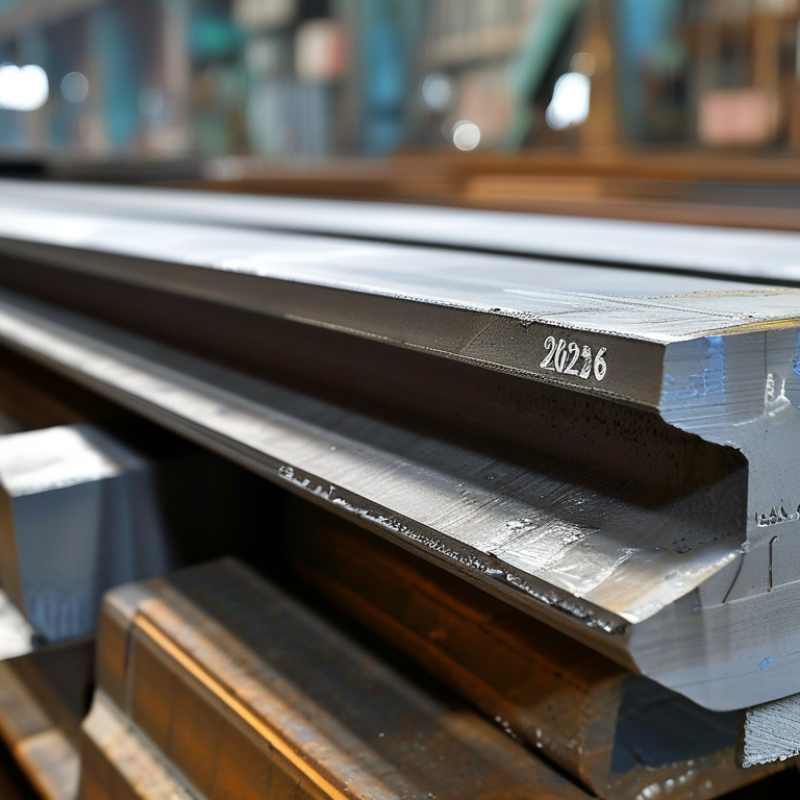
ASTM A572-50 steel I beams are hot-rolled structural sections made under ASTM A572/A572M requirements. Grade 50 provides a minimum yield strength of 50 ksi, or 345 MPa. Its minimum tensile strength is 65 ksi, or 450 MPa. This strength-to-weight balance can reduce steel volume in heavily loaded frames. ASTM requirements also define elongation, supporting controlled deformation before failure. Check the exact thickness limits before ordering.
The profile resembles a capital “I,” with two flanges connected by a web. Flanges resist bending, while the web mainly carries shear. Common applications include warehouses, bridges, industrial platforms, and multistory buildings. The World Steel Association reported 1,882.6 million tonnes of crude steel production in 2024. That scale reflects strong global demand, but it does not guarantee consistent beam availability. Sizes, lengths, surface condition, and regional rolling capacity still differ.
For global buyers, mill certificates should confirm grade, heat number, chemical composition, mechanical results, and dimensional tolerances. Welding plans should review carbon equivalent and preheating needs. AISC 360 design provisions can help engineers check bending, shear, buckling, and connection behavior. A beam is not just a profile. Unsupported length matters greatly. Corrosion protection also changes lifecycle cost, especially in coastal or humid environments. In practice, selecting only by nominal weight is a weak shortcut. ASTM compliance must be verified against the project design, applicable local standards, and independent inspection requirements.
ASTM A572-50 steel I beams are specified by strength, chemistry, and dimensional control. ASTM A572/A572M requires a minimum yield strength of 50 ksi, or 345 MPa. Minimum tensile strength is 65 ksi, or 450 MPa. Elongation typically reaches 18% over eight inches. These values support demanding structural applications, but thickness can affect required performance. Confirm the exact table in the current standard.
For global buyers, ASTM A6/A6M controls key dimensions, straightness, and weight tolerances. AISC 360 also uses Fy and Fu values in structural design checks. The World Steel Association reported about 1.88 billion tonnes of crude steel production in 2024. That scale supports broad supply, yet certification quality still varies between mills. Ask for heat numbers, mill test certificates, chemical analysis, and Charpy results when project specifications require toughness. Field experience shows that paperwork often looks complete. It may not match the beam bundle.
Tips: Check section size, mass, length, camber, and surface condition before shipment. Compare the certificate heat number with the stamped beam. Do not assume “A572-50” alone confirms welding suitability. Review carbon equivalent, welding procedure requirements, and applicable regional codes. ASTM compliance is important, but traceability makes it dependable. Minor dimensional deviations can complicate connections. Some buyers overlook this.
Selecting the right ASTM A572-50 I beam starts with the project load, not the catalog price. ASTM A572/A572M Grade 50 requires at least 50 ksi yield strength and 65 ksi tensile strength for typical structural products. Start with the load. Check span, axial force, lateral-torsional buckling, connection design, corrosion allowance, and fire exposure. AISC 360 can support structural calculations, but the project’s local code remains controlling.
Global purchasing adds practical risks. The World Steel Association’s World Steel in Figures 2024 reports 1.89 billion tonnes of crude steel production in 2023. Large output does not guarantee suitable availability, dimensions, or delivery timing. Specify the exact nominal depth, flange width, web thickness, length tolerance, straightness, and surface condition. For coastal sites, ask whether the corrosion protection system matches the exposure category. Small details matter.
Request a heat-number-linked mill certificate showing chemistry, yield strength, tensile strength, elongation, and heat treatment status. An EN 10204 3.1 certificate, or the project’s equivalent, improves traceability. Confirm welding procedures, carbon-equivalent limits, and required impact tests before fabrication. A common mistake is assuming “Grade 50” automatically meets seismic or low-temperature requirements. It does not. I would also recheck every section against the latest loading model; early assumptions are often convenient, but not always right.
For global buyers, ASTM A572-50 steel I beams begin with controlled material selection. Mills verify the heat chemistry before charging the furnace. Carbon, manganese, phosphorus, sulfur, and alloying elements must remain within the specified range. The billet is reheated evenly, then passed through grooved rolls to form the beam profile. Controlled cooling helps reduce residual stress. Straightening follows, but excessive force can create hidden distortion. Details matter.
Quality inspection combines records, measurements, and physical tests. Inspectors check flange width, web depth, thickness, straightness, and surface condition using calibrated tools. Each beam should carry a traceable heat or batch mark. Tensile testing confirms yield strength and tensile strength against ASTM requirements. Bend testing may support ductility verification when required by the purchase order. Ultrasonic testing is useful for specified applications, but it should not be treated as automatic proof of every property. A clean certificate cannot repair poor traceability.
Certification should include the applicable ASTM edition, grade, dimensions, heat number, chemical results, mechanical results, and inspection status. The mill test certificate must correspond to the actual shipment, not a similar production lot. Independent inspectors can witness sampling, review calibration records, and verify loading quantities. Buyers should compare certificates with labels, packing lists, and contract tolerances before shipment. Mistakes still occur. A missing signature or unclear heat mark deserves investigation, not assumption. Clear documentation supports customs review, fabrication planning, and responsible engineering decisions.
ASTM A572/A572M Grade 50 requires a minimum yield strength of 345 MPa and a minimum tensile strength of 450 MPa. Reliable manufacturing control normally includes heat-number traceability, chemical analysis, dimensional inspection, ultrasonic or visual checks where specified, and a material test report confirming compliance with the applicable ASTM requirements. The standard elongation requirement is commonly 18% in 200 mm for the referenced product specification and should be verified against the exact section size and purchase order.
International sourcing requires more than comparing prices. Buyers should confirm ASTM A572 Grade 50 compliance, beam dimensions, yield strength, tensile strength, and chemical limits. Request a current mill test certificate for every heat number. Match each certificate with bundle markings and packing lists. Traceability matters.
Inspectors should verify flange thickness, web depth, straightness, surface condition, and weld-free edges before loading. Small dimensional errors can complicate fabrication later. For shipping, use dry timber supports, secure steel bands, and weather-resistant wrapping. Check the container or vessel plan carefully. Heavy beams need correct lifting points and balanced loading. Port restrictions may also affect delivery schedules and freight costs.
Tips: Compare Incoterms, not only unit prices. Confirm whether duties, inland transport, testing, and insurance are included. Ask for pre-shipment photographs and an independent inspection report. Review the destination country’s import rules, labeling requirements, and structural standards. ASTM certification may not replace local approval. That point is often missed. Keep records of certificates, inspection results, packing details, and communications. A reliable supplier should answer technical questions clearly and disclose production limits. Still, buyers should verify every claim independently. Mistakes happen, even with experienced teams.