Why Choose Space Blanket Insulation for Your Building Needs?
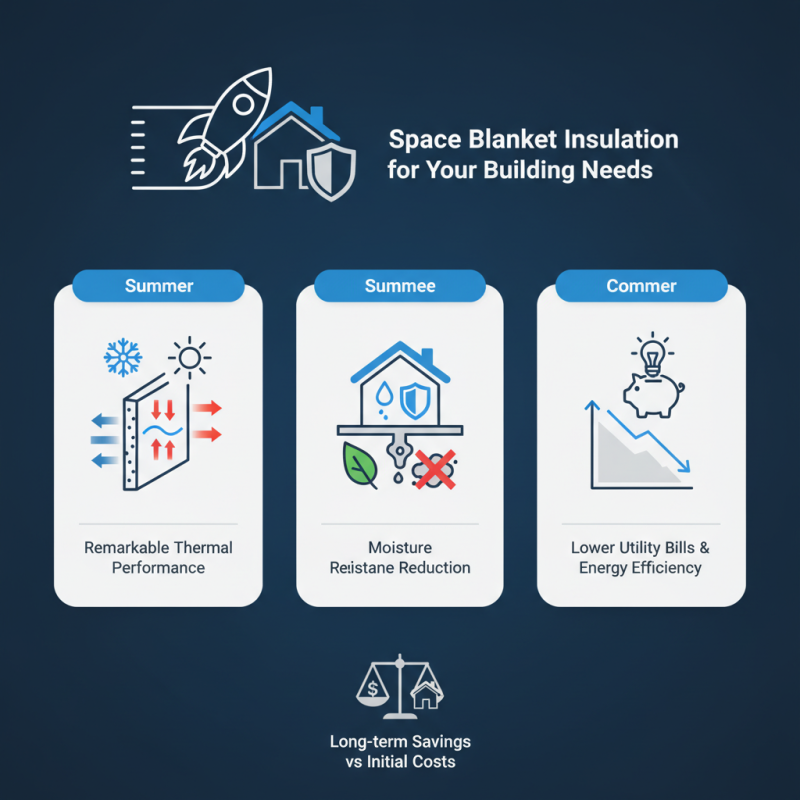
When considering insulation for your building, Space Blanket Insulation stands out. This innovative product offers remarkable thermal performance and versatility. Many homeowners and builders choose it for its lightweight and easy-to-install design.
Space Blanket Insulation reflects heat, keeping interiors warm in winter and cool in summer. Its unique composition provides moisture resistance, reducing the risk of mold. In various climates, this insulation maintains energy efficiency, which can lead to lower utility bills.
However, some users may not fully understand its benefits. It's essential to weigh the long-term savings against initial costs. While Space Blanket Insulation may seem like a simple solution, its impact on comfort and energy use is significant and deserves thoughtful consideration.
Benefits of Space Blanket Insulation in Energy Efficiency
Space blanket insulation is gaining traction in modern building projects, particularly for its significant energy efficiency benefits. According to a report by the U.S. Department of Energy, proper insulation can reduce energy costs by up to 30%. This is crucial, especially as energy prices continue to rise. Space blankets act as a barrier to heat loss in winter and heat gain in summer, which balances temperatures throughout the year.
The lightweight and reflective properties of space blanket insulation enhance thermal performance. Buildings insulated with this material have recorded a 10-20% reduction in heating and cooling needs. Insulation contributes not only to energy savings but also to comfort. Reducing drafts and maintaining even temperatures can improve indoor air quality as well.
Tips: Choose the right R-value for your climate. Proper installation is vital for maximum efficiency. Be mindful that improper sealing can lead to performance issues. Ensure that your insulation works in tandem with other building components for optimal energy conservation. Ultimately, investing in quality insulation solutions can lead to significant long-term savings and environmental benefits.
Comparison of Space Blanket Insulation to Traditional Insulation Materials
Space blanket insulation has emerged as a viable alternative to traditional insulation materials. Unlike fiberglass or foam, space blankets utilize a reflective surface that enhances thermal performance. Studies show that these materials can reduce heat loss by up to 50%. This efficiency is crucial in reducing energy costs and improving overall comfort.
Traditional insulation often absorbs moisture, which can lead to mold and reduced effectiveness. Space blankets, on the other hand, are moisture-resistant. This property allows them to maintain their thermal integrity over time. A report from the U.S. Department of Energy highlights that moisture-related problems in buildings can increase energy consumption by 20%. By mitigating these issues, space blanket insulation presents a more reliable solution.
While space blanket insulation may require a different installation approach, its benefits are noteworthy. Many builders have reported smoother installation processes with space blankets compared to fibrous materials. Yet, some challenges remain. For example, ensuring complete coverage is essential to avoid thermal bridges. It’s vital to weigh these nuances when selecting insulation for your building needs.
Industry Standards and Certifications for Space Blanket Insulation
Space blanket insulation stands out in the construction industry, mainly due to its strong performance metrics. These materials often meet or exceed industry standards for thermal resistance, confirmed by the American Society for Testing and Materials (ASTM). According to a study by the Energy Department, the insulating effectiveness of space blankets can reduce energy consumption by up to 30%. This is crucial as rising energy costs impact building expenses considerably.
Certification plays a vital role in the acceptance of space blanket insulation. Many products demonstrate compliance with the Insulation Contractors Association of America (ICAA) standards. The ICAA requires that materials are tested for fire safety, moisture resistance, and thermal performance. Compliance ensures that these materials are both safe and efficient. However, it is important for builders to verify certification details, as some products may not meet all necessary standards.
Despite these advantages, not all space blanket insulation options are created equal. Certain types may offer limited lifespan or environmental concerns. Some reports suggest that a few products can degrade when exposed to high humidity. This highlights the need for careful selection of insulation materials tailored to specific environmental conditions. The commitment to rigorous standards can guide better choices.
Cost-Effectiveness of Space Blanket Insulation Over Time
When considering insulation solutions, space blanket insulation stands out for its cost-effectiveness over time. This material can significantly reduce energy bills, as it improves thermal efficiency in buildings. Homeowners and builders often notice lower heating and cooling costs. Over years, these savings add up, making it a wise investment.
Tips: Consider your local climate before choosing insulation. In colder areas, space blankets can greatly enhance warmth retention. Understanding the specific needs of your building is crucial. Also, think about the longevity of materials. Space blanket insulation is durable, resisting wear over time.
However, some may underestimate the initial installation costs. It's important to weigh these expenses against potential long-term savings. Sometimes, cheaper alternatives may lead to higher energy bills later on. Investing in quality insulation can offer many benefits, but always assess your unique situation first.
Why Choose Space Blanket Insulation for Your Building Needs? - Cost-Effectiveness of Space Blanket Insulation Over Time
| Insulation Type | Initial Cost ($/sq ft) | Energy Savings (%) | Lifespan (Years) | Cost Over 25 Years ($/sq ft) |
| Space Blanket Insulation | 1.50 | 25 | 50 | 2.00 |
| Fiberglass Insulation | 1.00 | 20 | 30 | 1.67 |
| Spray Foam Insulation | 2.50 | 30 | 50 | 4.00 |
| Cellulose Insulation | 1.25 | 22 | 30 | 1.75 |
Applications of Space Blanket Insulation in Various Building Types
Space blanket insulation is increasingly popular across various building types. Its unique design allows for enhanced thermal performance, making it ideal for both residential and commercial structures. According to a report by the Department of Energy, buildings with effective insulation can save up to 20% on their energy costs. This is significant for homeowners and businesses alike, considering rising energy prices.
In residential settings, space blanket insulation is often used in attics and walls. Its lightweight nature allows for easy installation. Reports indicate that proper insulation can lead to a temperature difference of up to 10 degrees Fahrenheit inside a home, improving comfort while reducing heating and cooling demands. In commercial applications, such as warehouses, its reflective properties help maintain stable indoor temperatures. This can reduce the workload on HVAC systems, thus saving on maintenance costs over time.
Some critics note that while space blankets offer many benefits, they may not be suitable for all climates. For instance, in very humid areas, additional moisture barriers may be required to prevent condensation issues. This highlights the need for a careful assessment before choosing insulation types. Building owners should consult with professionals to evaluate their specific needs and conditions. Proper analysis ensures that the chosen insulation provides the maximum efficiency and durability.
Applications of Space Blanket Insulation in Various Building Types
This chart illustrates the percentage of space blanket insulation usage in different building types, highlighting its versatility and effectiveness in various applications.