How to Choose Overlay Welded Pipe for Your Project?
Choosing the right Overlay Welded Pipe begins with understanding the environment, not simply comparing prices. A pipe carrying abrasive slurry faces different demands from one exposed to seawater, hydrogen, or high-temperature chemicals. The overlay alloy, base-pipe grade, weld process, and finished thickness must work together. A bright surface alone proves very little.
John C. Lippold, a respected welding engineer and professor emeritus at The Ohio State University, describes the discipline simply: “Welding is both a science and an art.” That idea matters when selecting Overlay Welded Pipe. Metallurgical dilution can change corrosion resistance. Heat input can influence hardness and cracking risk. Poor surface preparation may leave hidden defects beneath an attractive finish. Small details become expensive failures.
A reliable selection process starts with measurable service conditions. Record the fluid chemistry, operating temperature, pressure, flow speed, and expected wear pattern. Specify minimum overlay thickness after machining, not before. Ask for procedure qualification records, chemical analysis, hardness results, and non-destructive testing reports. Confirm how the pipe will be transported, installed, and repaired.
There is no universal “best” overlay. That is the uncomfortable part. A nickel alloy may resist corrosion well, yet cost more than the project allows. A carbide-rich layer may resist abrasion, but it can be difficult to machine. Even experienced teams can overlook cyclic loading or thermal expansion. This guide explains how to compare materials, manufacturing controls, inspection evidence, and lifecycle value before approving a pipe for service.
Understanding Overlay Welded Pipe and Its Applications
How to Choose Overlay Welded Pipe for Your Project?
Understanding Overlay Welded Pipe and Its Applications
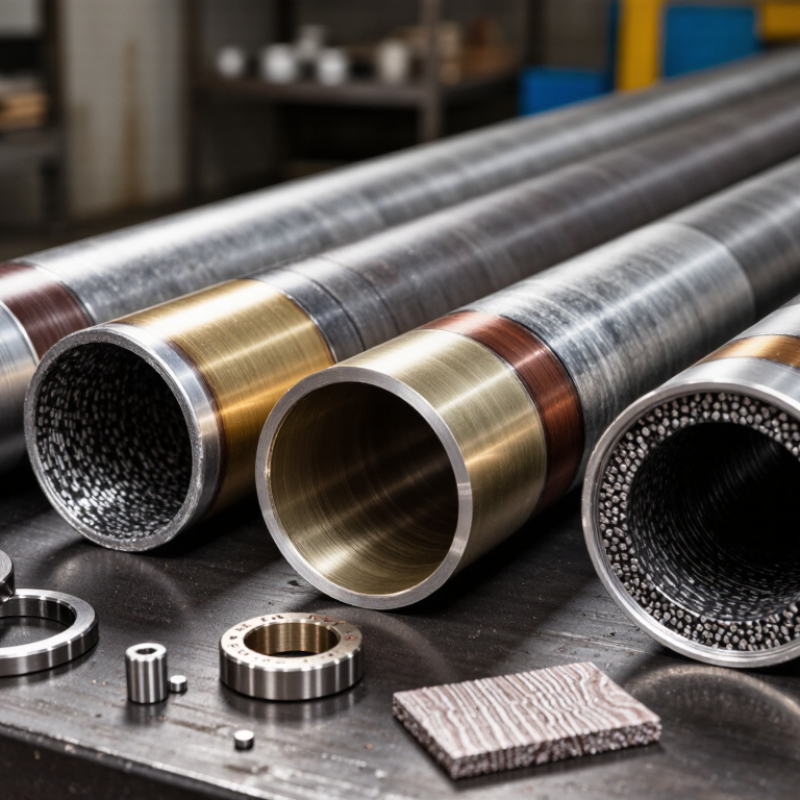
Overlay welded pipe combines a structural steel pipe with a corrosion- or wear-resistant alloy layer. The base pipe carries pressure, while the overlay protects the internal surface. Common overlay materials include stainless steel, nickel alloys, and chromium-rich hardfacing metals. Selection depends on fluid chemistry, temperature, pressure, flow velocity, and solid-particle content.
The NACE IMPACT study estimated global corrosion costs at about 2.5 trillion US dollars annually, equal to 3.4% of global GDP. Its findings also indicated that effective corrosion management could reduce losses by 15% to 35%. These figures explain why overlay systems can be practical in chemical lines, offshore equipment, power plants, mining pipelines, and slurry transport.
Details matter. Ask for overlay thickness, dilution control, hardness, porosity limits, and bond-test results. Check whether the welding procedure matches the service temperature and thermal cycling. For sour environments, material selection should align with ISO 15156 requirements. For abrasive slurry, hardness alone may mislead; impact resistance and actual particle size also matter.
A pipe can look excellent and still fail early.
Independent inspection should include visual checks, ultrasonic testing, and dimensional verification. In my experience, project teams sometimes specify alloy chemistry first and operating conditions later. That order creates avoidable risk. A better choice connects laboratory data with field evidence, maintenance access, and the real failure history of similar piping.
Assessing Project Conditions and Performance Requirements
How to Choose Overlay Welded Pipe for Your Project?
Assessing Project Conditions and Performance Requirements
Assessing project conditions starts with the fluid, not the pipe schedule. Define temperature, pressure, velocity, chemistry, solids, cycling, and inspection access. Chlorides, carbon dioxide, hydrogen sulfide, and wet insulation can change the failure mechanism. In field reviews, missing water chemistry often causes major design uncertainty. Measure it. Record minimum and upset conditions, not only normal operation.
Overlay weld metal must match the service threat and the substrate’s welding constraints. Check dilution, bond strength, heat-affected zones, hardness, and repair procedures. API 5LD and applicable ASME rules can guide clad-pipe qualification, but project specifications still control. NACE International’s IMPACT study estimated global corrosion costs at US$2.5 trillion annually, or about 3.4% of global GDP. It also identified potential savings of 15–35% through effective corrosion control. That supports lifecycle thinking, not automatic overdesign.
Compare options using remaining-wall calculations, erosion allowances, weldability, and inspection intervals. DNV-RP-F116 provides a framework for pipeline integrity management and inspection planning. Do not select alloy by temperature alone. A cheaper overlay can fail early if velocity, turbulence, or shutdown chemistry was overlooked. Small gap. Review the decision with materials, welding, operations, and inspection specialists. One uncomfortable question remains: can the site verify overlay quality after installation?
How to Choose Overlay Welded Pipe for Your Project?
Typical hardness ranges help match overlay materials with abrasion, corrosion, and temperature requirements.
Higher hardness generally improves resistance to sliding and impact abrasion, while stainless, nickel-based, and cobalt-based overlays are often selected when corrosion resistance or elevated-temperature performance is more important. Final selection should also consider particle size, impact energy, operating temperature, corrosion chemistry, pipe wall thickness, and weldability.
Selecting a Supplier and Verifying Total Project Value
How to Choose Overlay Welded Pipe for Your Project?
Selecting a Supplier and Verifying Total Project Value
Choosing overlay welded pipe should begin with service conditions, not the lowest quotation. Confirm temperature, pressure, fluid chemistry, flow velocity, and expected erosion. The overlay alloy must match the actual failure mechanism. A corrosion-resistant layer may not withstand abrasive solids. The reverse can also happen. AMPP’s IMPACT study estimated global corrosion costs at 3.4% of GDP, or about US$2.5 trillion annually. That figure shows why material selection deserves engineering attention.
Evaluate suppliers through evidence, not confident claims. Request welding procedure qualifications, operator records, chemical analysis, overlay thickness maps, dilution results, and non-destructive examination reports. Check whether testing covers the pipe diameter, base material, and production position required for your project. Ask about traceability from plate or tube to final inspection. A supplier with strong documentation may cost more initially, but poor records can create delays during installation. I would not treat certificates as proof by themselves. Independent verification still matters.
Tips: Compare total project value, including welding repairs, transport, field fitting, shutdown exposure, inspection, and expected service life. Use a simple cost-per-year model. Include realistic repair assumptions. A low quote can win the spreadsheet and lose the outage. Also inspect sample sections when possible. Look for uneven beads, visible porosity, excessive grinding, or inconsistent thickness. The best supplier is not always the cheapest. It is the one that can explain the risks clearly and repeat the required quality.