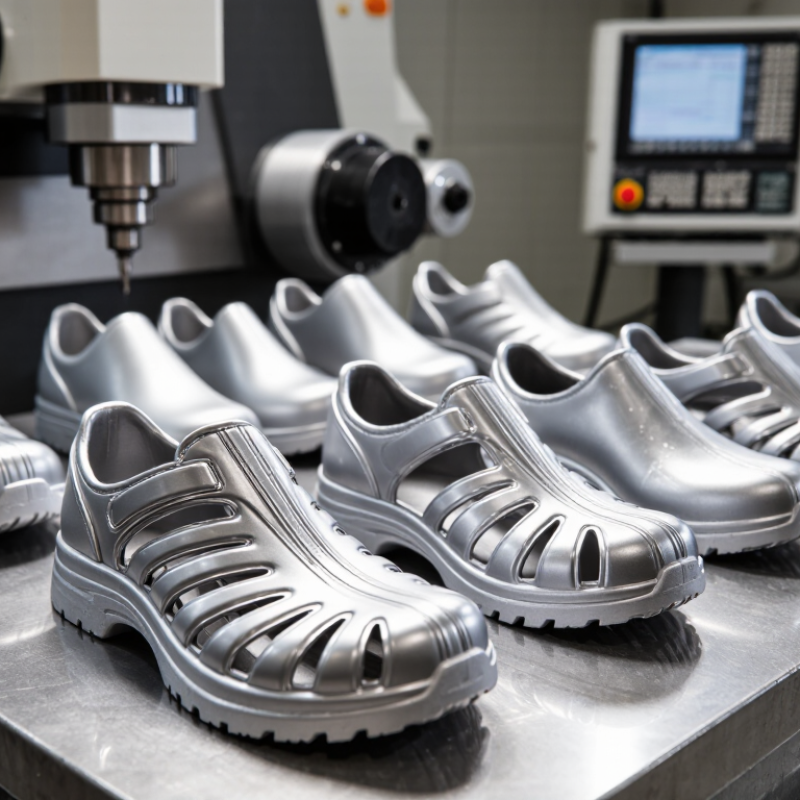
| Mould Manufacturing Methods | CNC machining, EDM processing, wire cutting, polishing and trial fitting are commonly combined for EVA footwear mould production. | Supports accurate cavities, clean parting lines and repeatable mould assembly. | Request process photographs, machining records and a sample mould inspection report. |
| Compatible EVA Processes | Moulds may be designed for compression moulding, injection moulding or a combination of production methods, depending on the footwear construction. | Helps buyers match mould design with equipment, foam density and production requirements. | Confirm machine type, mould base dimensions, steam or heating requirements and approved process parameters. |
| Material Options | Common mould materials include aluminium alloys for lightweight tooling and steel options for higher wear resistance or longer production cycles. | Allows a balance between tooling cost, heat transfer, weight and expected service life. | Ask for the material grade, hardness information, treatment details and material certificate where applicable. |
| Design Input Compatibility | Professional suppliers generally work from 2D drawings, 3D CAD files, physical samples, lasts or reverse-engineered references. | Reduces communication barriers when buyers use different footwear development workflows. | Confirm accepted file formats, revision control, data confidentiality and sample approval procedures. |
| Prototype and Sampling | A normal development sequence includes design review, preliminary tooling, first trial, dimensional correction and final approval. | Enables fit, appearance, shrinkage and demoulding issues to be resolved before mass production. | Request a written sample approval workflow and a defined number of included modification rounds. |
| Dimensional Control | Inspection commonly covers cavity dimensions, mould alignment, flash control, texture consistency and critical footwear reference points. | Improves size consistency and reduces defects during repeated EVA production. | Check whether the supplier uses calibrated gauges, 3D scanning or coordinate measuring equipment. |
| Surface Texture Capability | Available finishes can include polished, matte, leather-like, patterned, logo-textured and other custom cavity surfaces. | Supports product differentiation without relying only on colour or material changes. | Request texture samples and confirm how surface wear, cleaning and repair are handled. |
| Tooling Lead-Time Planning | Lead time varies with mould complexity, size range, cavity quantity, surface treatment, trial requirements and design revisions. | Provides a more realistic production schedule than using a single standard delivery promise. | Obtain a milestone schedule covering design confirmation, machining, first trial, corrections and final shipment. |
| Size-Set Development | Manufacturers commonly produce multiple sizes from an approved last, with size grading based on the buyer's technical specification. | Supports consistent fit across regional and international size systems. | Confirm the grading table, size range, width options and approval requirements for each size. |
| Quality Documentation | Commercial tooling projects may include inspection reports, material records, trial samples, dimensional data and corrective-action records. | Improves traceability and makes supplier performance easier to audit. | Include document requirements in the purchase order and define acceptance criteria before production starts. |
| Export Readiness | Export-capable suppliers normally provide commercial invoices, packing lists, shipping marks and transport-ready protective packaging. | Reduces customs, handling and transit risks for international deliveries. | Confirm Incoterms, export documents, crate or carton specifications and responsibility for freight damage. |
| After-Sales Tooling Support | Support may include mould cleaning guidance, minor repairs, replacement components, cavity corrections and future size additions. | Extends tooling usability and simplifies future product updates. | Clarify warranty coverage, response time, repair charges and ownership of tooling data. |