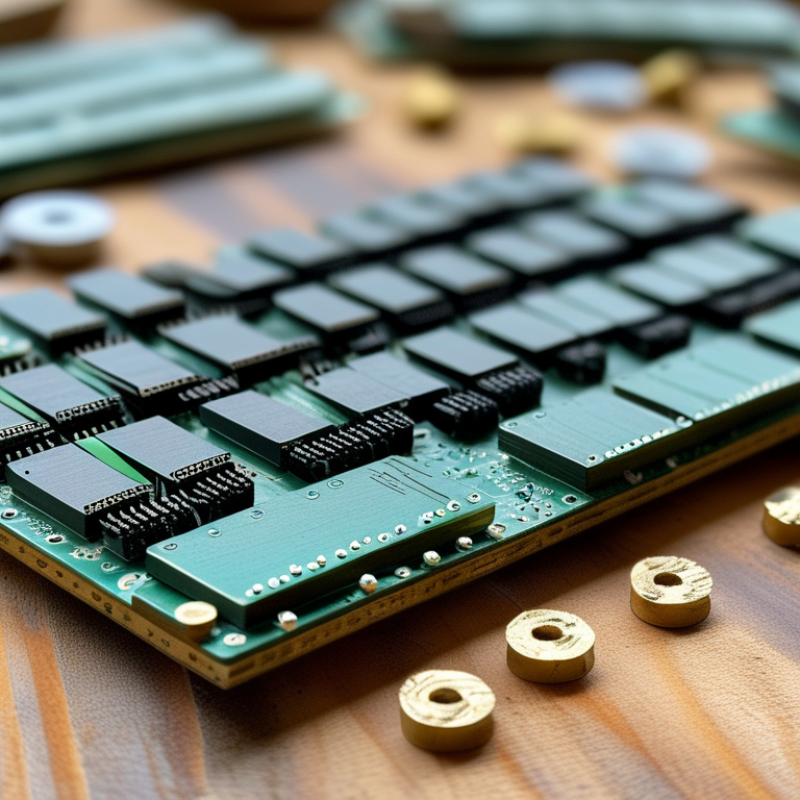
10 PC Board Buying Tips for Global Buyers?

Buying a pc board across borders is not simply a price comparison. It is a technical decision with financial consequences.

A supplier may offer an attractive quotation. Yet the board can fail during inspection if the stackup, copper weight, or surface finish is unclear. A missing impedance report may create trouble later. A delayed prototype can also disrupt an entire product launch. Experienced buyers check these details before approving production.

John W. Mitchell, President and CEO of IPC, has said, “Standards are the foundation of the electronics industry.” This principle remains practical for global procurement. Buyers should review IPC class requirements, material specifications, test methods, and acceptance criteria with the manufacturer. They should also confirm certifications, traceability, export documentation, and realistic delivery terms. A polished website is not proof of factory capability.

The following ten pc board buying tips focus on decisions that affect quality, cost, communication, and supply continuity. They cover supplier evaluation, design files, layer count, controlled impedance, testing, packaging, and after-sales support. Small details matter. A 0.1-millimeter tolerance can change production results. A poorly protected connector may arrive with visible oxidation after ocean transport.

No checklist is perfect. Even careful buyers sometimes trust a low quote too quickly. That mistake deserves reflection. Good purchasing combines technical evidence, direct questions, sample reviews, and honest risk assessment. The strongest supplier is not always the cheapest. It is the one that can repeatedly deliver the required pc board, explain its process clearly, and respond responsibly when something goes wrong.

10 PC Board Buying Tips for Global Buyers?

Define Your PC Board Requirements and Technical Specifications

Defining your PC board requirements begins with the product’s real working conditions. Record the board length, width, thickness, layer count, and expected quantity. Then describe the operating environment. Will the board face vibration, moisture, heat, or frequent temperature changes? A control board near a motor needs different protection from one inside a dry office device.

Technical details must be measurable. Specify the base material, copper weight, surface finish, minimum trace width, spacing, hole diameter, and impedance targets. Include allowable tolerances, because “standard size” can create costly assumptions.

Your fabrication files should match the written specification. Gerber files, drill files, stack-up drawings, and assembly notes should use consistent revisions. Check them again. Small gaps between documents often cause large delays.

A reliable purchasing process also defines inspection requirements before ordering. Ask for electrical testing, visual inspection, dimensional checks, and material documentation when appropriate. State acceptance criteria for solderability, warpage, exposed copper, and surface marks. In practical sourcing reviews, missing details are common, even in experienced teams. I have seen a correct drawing paired with an outdated drill file. That mistake was avoidable. Leave room for engineering review, prototype feedback, and one uncomfortable question: which specification is truly necessary, and which one is only an old habit?

Compare Board Materials, Layer Counts, and Manufacturing Capabilities

10 PC Board Buying Tips for Global Buyers

Choosing a board starts with the material, not the quotation. FR-4 suits many digital products, but high-speed designs may need low-loss laminates. Check glass transition temperature, dielectric stability, copper thickness, and thermal expansion. A cheaper material can become expensive after repeated heating cycles. I have seen prototypes pass room-temperature tests, then fail after soldering. That mistake was avoidable.

Layer count should match routing, power integrity, and mechanical limits. More layers are not automatically better. Ask for controlled impedance capability, via structures, minimum trace spacing, and registration tolerance. Confirm whether the factory supports buried vias, blind vias, or rigid-flex construction. Request a sample cross-section report. It reveals more than a polished sales sheet. Also inspect solder mask alignment around fine-pitch pads.

Manufacturing capability matters across the full production cycle. Review drilling accuracy, copper plating uniformity, surface finish options, and automated optical inspection. Ask how test fixtures are managed for small batches. Verify electrical testing, material traceability, and change-control procedures. Production capacity should match your forecast, not just your first order. A supplier may promise ten thousand boards, yet lack enough inspection staff. I would also compare packaging, moisture protection, export documents, and delivery records. These details seem minor until boards arrive warped, damp, or poorly labeled.

Evaluate Supplier Quality Systems, Certifications, and Production Experience

A reliable PCB supplier needs more than a polished website. Review its quality system, process controls, and production history. The ISO Survey 2022 recorded 1,265,216 ISO 9001 certificates worldwide. That number shows certification is common, not automatically meaningful. Ask for the certificate scope, issuing body, latest audit date, and any unresolved findings. A certificate covering trading activities is not enough.

Go deeper. Request process-control plans for drilling, plating, solder mask, and electrical testing. Check whether the supplier uses traceable lot numbers and retains inspection records. For high-reliability boards, verify relevant IPC standards, cross-section analysis, and acceptance criteria. Ask for sample corrective-action reports. Real evidence matters. A supplier should explain how it handled voids, barrel cracks, or impedance failures without hiding uncomfortable details.

Production experience must match your board’s risk. A factory experienced with simple two-layer boards may struggle with fine-pitch, high-layer-count, or controlled-impedance designs. Review similar projects, monthly capacity, equipment age, and operator training records. IPC’s Technology Roadmap for Printed Circuit Boards highlights rising interconnect density and manufacturing complexity, so old experience may not transfer well. I would also check references carefully; one successful prototype proves little. Avoid judging only by price. A cheap quotation can conceal weak inspection coverage, delayed corrective action, or unstable material control.

Review Pricing, Minimum Orders, Lead Times, and Shipping Terms

Global PC board buyers should compare more than the quoted unit price. A low offer may exclude tooling, testing, setup, or protective packaging. Ask whether the price covers the exact layer count, board thickness, copper weight, surface finish, and inspection level. Request a written quotation with currency, validity, payment terms, and price breaks. Suppliers with clear cost explanations are easier to evaluate and manage.

Tip: Compare complete landed costs.

Minimum order quantities can affect cash flow and storage. A supplier may offer a lower price for 1,000 boards, while your project needs only 200. Ask about prototype quantities, mixed designs, and repeat-order pricing. I have seen buyers focus too heavily on unit cost. Later, unused inventory became the real expense. Review demand forecasts carefully, even when estimates feel uncertain.

Lead times should separate engineering review, fabrication, testing, and dispatch. Confirm when production starts. It may not begin when the purchase order is sent. Ask how holidays, material shortages, and design changes affect the schedule. Build a small buffer for approval delays. Perfect planning is rarely realistic.

Tip: Get milestone dates in writing.

Shipping terms deserve equal attention. Clarify who arranges freight, insurance, export documents, customs clearance, and delivery charges. Confirm the destination address and agreed trade term before payment. Compare air and sea options by total cost and delivery risk. Keep records of every revision. Small wording differences can create expensive misunderstandings.

10 PC Board Buying Tips for Global Buyers: Review Pricing, Minimum Orders, Lead Times, and Shipping Terms

The figures below are practical industry benchmarks for initial sourcing comparisons. Actual quotations vary by board construction, order volume, testing requirements, region, exchange rates, and logistics conditions.
No. Buying Tip Data to Review Typical Market Benchmark Recommended Buyer Action
1 Define the PCB construction precisely Layer count, board thickness, copper weight, surface finish, material grade, dimensions, and tolerance. Two- to four-layer FR-4 boards commonly use approximately 1.0–1.6 mm thickness and 1 oz outer-layer copper, but controlled-impedance or high-current designs may require different specifications. Send complete fabrication data, drill files, stack-up requirements, and a clearly revision-controlled drawing before requesting prices.
2 Compare prices on the same quantity basis Prototype price, production price, engineering charges, tooling, testing, packaging, and taxes. Prototype pricing is often several times higher per board than a 500–1,000-piece production order because setup and engineering costs are spread over fewer units. Request a tiered quote for at least 5, 50, 100, 500, and 1,000 pieces, with one-time charges shown separately.
3 Check minimum order quantities Minimum order, minimum panel quantity, minimum order value, and whether mixed designs are allowed. Prototype services may accept 1–10 boards, while standard production programs often use order quantities from 50 to 500 pieces or more. Confirm whether the minimum applies per part number, per revision, per panel, or per purchase order.
4 Evaluate panel utilization Panel size, number of units per panel, routing or V-scoring method, waste allowance, and depanelization limits. Improved panel utilization can materially reduce the effective unit cost; irregular outlines and large unused areas generally increase waste. Ask for a proposed panel drawing and compare the quoted price per finished board rather than only the price per panel.
5 Verify manufacturing lead times Engineering review, fabrication, electrical testing, inspection, and dispatch dates. Simple prototypes commonly take about 5–10 working days; standard multilayer production often requires approximately 10–20 working days after data approval. Ask whether lead time starts after payment, drawing approval, material confirmation, or final data release.
6 Separate production time from shipping time Transit method, origin and destination, customs clearance, delivery appointment, and public holidays. Express air delivery may take roughly 3–7 calendar days in transit; economy air or consolidated freight commonly takes about 7–15 days, excluding customs delays. Build a schedule using separate manufacturing, transit, customs, and receiving buffers.
7 Compare shipping terms carefully Incoterm, freight responsibility, import duties, customs brokerage, insurance, and final-mile delivery. EXW places most transport responsibility with the buyer; FCA assigns delivery to the named carrier; DAP generally includes delivery to the destination but usually excludes import duties and taxes; DDP generally includes import clearance and duties where legally available. Request both an origin-based and a delivered-cost quote using the same named place and Incoterms version.
8 Review testing and quality controls 100% electrical test, flying-probe or fixture test, visual inspection, dimensional inspection, impedance testing, and inspection records. Electrical testing is commonly charged separately or included only under specified production conditions; fixture-based testing may add a one-time setup cost. Define the required test method, acceptance criteria, sampling level, certificate format, and nonconformance process in the purchase order.
9 Check payment and quotation validity Currency, payment schedule, bank fees, quotation validity period, exchange-rate adjustment, and cancellation terms. Prototype orders often require full payment before production; established production orders may use deposits and balance payments linked to shipment or inspection. Obtain the quote date, validity period, payment milestones, and all bank or transaction charges in writing.
10 Calculate total landed cost Board price, tooling, testing, packaging, freight, insurance, duties, taxes, brokerage, and internal receiving costs. For small international orders, freight, brokerage, and import charges can represent a significant share of the delivered cost, even when the board price is low. Use a landed-cost worksheet and compare suppliers by delivered cost, quality risk, and schedule reliability—not by unit price alone.
Note: Lead times, prices, minimum orders, freight charges, duties, and Incoterm availability should be confirmed in a written quotation for the specific board design and destination country.

Verify Prototypes, Quality Inspections, and Long-Term Support

For global PC board buyers, a prototype is evidence, not proof. Check solder mask edges, drilled holes, pad alignment, and surface finish under bright light. Compare the sample with Gerber files and the approved stack-up. Record every deviation, even minor ones. A neat prototype can still hide weak process control.

Use an independent quality inspection before shipment. Inspect layer count, copper thickness, impedance coupons, dimensions, and packaging. Request test records for electrical continuity and insulation resistance.

IPC standards provide useful acceptance criteria, but buyers must define them clearly in the purchase agreement. McKinsey Global Institute reported that 93% of supply-chain leaders planned resilience actions after repeated disruptions. Inspection is one practical action.

Do not treat inspection as a final event. It is too late then. Ask how rejected boards are traced, corrected, and prevented from returning. Resilinc’s 2023 EventWatchAI report recorded a year-over-year rise in supply-chain disruptions, reinforcing the need for backup capacity and transparent communication. Long-term support should include engineering change control, archived test data, replacement planning, and response targets. I have seen teams approve a prototype too quickly. That decision can create months of avoidable redesign work. Supplier support should remain measurable after the first shipment.