Let Us Know How We Can Help. We Are Your Dedicated Solutions Provider.

The automation industry is rapidly evolving, with a growing reliance on effective Control Components. These components are essential for efficient processes and improved system reliability. According to a recent report by MarketsandMarkets, the global market for control components is anticipated to reach $40 billion by 2025, reflecting the increasing investment in automation technology.
Experts emphasize the importance of selecting the right Control Components for automation solutions. John Smith, a leading expert in the field, stated, "Control Components are the backbone of any automation project." His insight highlights that without high-quality components, the entire automation system may falter.
Despite advancements, challenges remain. Many companies struggle with integrating new Control Components into existing systems. The risks of system failures can be high, leading to significant downtime. Continuous improvement in selecting appropriate control technologies is crucial for success. Addressing this gap is vital for harnessing the full potential of automation.
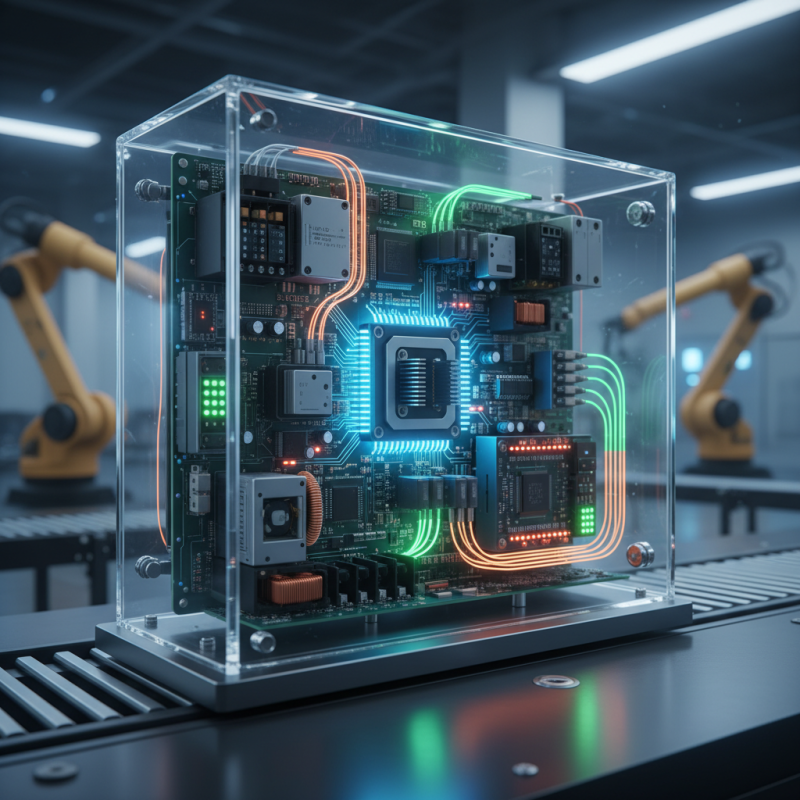
Automation control components are essential for successful automation solutions. These components include sensors, controllers, actuators, and human-machine interfaces (HMIs). Each component plays a crucial role. Sensors collect data from the environment. Controllers process this data to make decisions. Actuators execute those decisions. HMIs allow users to interact with the system.
When selecting components, clarity is vital. Ensure the components can communicate seamlessly. Compatibility is key; mismatched components can lead to inefficiencies. Always assess the specific needs of your automation system.
**Tip:** Focus on user-friendly HMIs. They enhance system accessibility and reduce training time. A well-designed interface improves overall efficiency.
Consider scalability. Today’s needs may differ from tomorrow’s. Choosing flexible components allows for future upgrades. Reflect on the long-term implications of your choices. A component that seems ideal now may be obsolete later.
**Tip:** Test components in real-life scenarios before full deployment. Early-stage testing reveals unforeseen issues. This practice saves time and resources down the road.
Effective automation solutions play a pivotal role in enhancing productivity across industries. Key features include adaptability, scalability, and real-time data analytics. According to a report by McKinsey, businesses can increase their productivity by up to 40% through effective automation. Advanced control components enable seamless integration with existing systems, but many still struggle with compatibility issues.
Another critical aspect is user-friendliness. Solutions must be designed for ease of use, ensuring that operators can swiftly navigate complex systems. A study from Gartner indicates that 60% of automation projects falter due to insufficient training. As users become familiar with the technology, the return on investment (ROI) improves. However, without ongoing support and education, these benefits may not fully materialize.
Security is also a pressing concern. An IBM report highlighted that 70% of automation implementations face cybersecurity vulnerabilities. Organizations must prioritize robust security protocols. While the potential for innovation is immense, companies need to remain vigilant. This dual focus on efficiency and security will shape the future of automation initiatives. Balancing these elements is a challenge, but necessary for sustainable growth.
| Component | Key Features | Benefits | Typical Applications |
|---|---|---|---|
| PLC (Programmable Logic Controller) | Flexible programming, real-time processing, high reliability | Improved process control, reduced downtime, ease of maintenance | Manufacturing, assembly lines, building automation |
| SCADA (Supervisory Control and Data Acquisition) | Real-time monitoring, data logging, remote access | Enhanced decision-making, improved operational efficiency | Utilities, oil & gas, water treatment facilities |
| HMI (Human-Machine Interface) | User-friendly interfaces, visualization tools, alarm management | Enhanced user experience, faster response times | Manufacturing, process control systems |
| Sensors | Diverse measurement capabilities, high accuracy, quick response | Improved data acquisition, better process insights | Automated systems, safety systems, monitoring |
| Actuators | Precision movement, high force capability, various types (linear, rotary) | Increased accuracy in movement, automated actions | Robotics, manufacturing equipment, process automation |
In automation systems, control components play a crucial role. These components can significantly influence the overall efficiency and effectiveness of operations. Sensors are one of the main types. They gather data from the environment. This data allows the system to respond to changes. However, sensor calibration may be challenging. Incorrect calibration can lead to errors and costly downtime.
Another essential component is the actuator. Actuators convert control signals into physical actions. They can move valves, motors, or even entire machines. While they are vital, actuators are often under-appreciated. Their maintenance is crucial for system reliability. Unexpected actuator failure can halt production. Regular checks can prevent these issues and improve longevity.
Controllers are also significant in automation. They process the data collected by sensors. Then, controllers send commands to actuators. This interaction creates a responsive system. Still, control algorithms may require fine-tuning. Overlooked adjustments can lead to inefficiencies. Balancing precision and speed is a constant effort. Each component must work in harmony to achieve desired outcomes.
This bar chart illustrates the usage percentage of various control components in automation systems. As depicted, PLCs (Programmable Logic Controllers) account for the highest percentage of usage, followed by SCADA (Supervisory Control and Data Acquisition) systems, DCS (Distributed Control Systems), HMIs (Human-Machine Interfaces), and sensors. These components are vital for creating effective automation solutions in various industries.
The integration of control components plays a critical role in automation solutions. According to a recent industry report, organizations that effectively integrate these components see productivity increases of up to 20%. This highlights the importance of cohesive operations for optimal performance. Utilizing sensors, controllers, and actuators in a synchronized manner enhances system responsiveness and efficiency.
However, challenges arise during integration. Compatibility issues can lead to a fragmented system. For example, data from various sensors may not align, causing delays in decision-making. In fact, a study found that 30% of companies face such integration problems. These errors can be costly, leading to unexpected downtime and reduced throughput. Companies must be proactive to address these concerns.
Inadequate planning can also hamper integration efforts. It is essential to assess the performance of individual components before connecting them into a larger system. A staggering 40% of businesses report underperformance due to poor integration strategies. Companies must focus on continuous improvement and strive for a more cohesive approach. This requires frequent evaluations and adjustments to maintain high efficiency levels.
Automation control technologies are evolving rapidly. The integration of AI and machine learning enhances decision-making processes. According to a recent report by McKinsey, the adoption of AI in automation can lead to productivity gains of up to 30%. This transformation is evident across various sectors, including manufacturing and logistics.
Tip: Regularly assess your automation needs. Evaluate if current technologies meet your demands. Adaptability is key for future success.
Cloud-based solutions are becoming more prominent. They offer flexibility and scalability, enabling companies to adjust resources. Research indicates that cloud adoption in automation increased by 50% in just two years. However, security concerns persist. Organizations must address vulnerabilities in their systems.
Tip: Invest in cybersecurity measures. This will protect your automation framework from potential threats.
While automation is essential, businesses must not overlook the human element. Skilled professionals are still needed for oversight. A mismatch between technology and workforce skills can lead to inefficiencies. Continuous training is critical to bridge this gap.