What Is the Difference Between Cable and Wire?

Understanding the difference between cable and wire is essential for safe electrical design, installation, and maintenance. In everyday conversation, people often use these terms interchangeably. Technically, however, they describe different constructions. A wire usually contains one electrical conductor, either solid or stranded. It may have insulation or remain bare for specific applications. A cable typically combines two or more insulated conductors inside one protective jacket. Some cables also include shielding, fillers, drain wires, or armor.

The distinction becomes clearer when you examine real equipment. A copper wire may connect a switch terminal inside a control panel. A flexible cable may run from that panel to a motor, carrying several conductors together. The jacket protects the inner conductors from moisture, abrasion, heat, and movement. Yet the terms can vary across industries and regional standards. That detail matters. Manufacturers, electricians, and engineers should check markings, conductor size, voltage ratings, temperature limits, and applicable safety standards before selecting either product.

Experience shows that confusion often begins with appearance. A thick insulated wire can look like a cable from a distance. A small cable can resemble a single wire. The difference is inside. I once found that a simple label prevented a costly installation mistake. Still, visual inspection alone is not enough. Product datasheets and certification marks provide stronger evidence. This guide will compare cable and wire by structure, flexibility, protection, application, and installation practice. It will also address common exceptions, because technical language is rarely perfectly consistent. That uncertainty deserves attention.
What Is the Difference Between Cable and Wire?

Basic Definitions of Wire and Cable

A wire is usually a single electrical conductor. It may be solid or made from many fine strands. Copper and aluminum are common choices because they carry current efficiently. The conductor is normally covered with insulation, such as plastic, to reduce contact, moisture, and abrasion risks. A bare wire also exists for grounding and other controlled applications.

A cable contains two or more insulated wires grouped inside one outer jacket. The wires may carry power, signals, or both. Fillers, shielding, and protective layers can improve flexibility or reduce electrical interference. For example, a household cable may contain live, neutral, and grounding conductors under one jacket. The outside can feel smooth, while the internal structure is surprisingly complex.

The difference is simple in basic terms: one conductor is a wire, and multiple protected conductors form a cable. However, everyday language is less precise. People sometimes call a single insulated conductor a cable, especially in industrial settings. That habit can create confusion during installation. In practice, check the conductor count, insulation rating, size, temperature limit, and intended environment. A flexible stranded wire suits repeated movement. A thick, jacketed cable works better for organized runs through walls or equipment. I have found that labels deserve careful attention; appearance alone can be misleading. Always match the product’s markings with the circuit requirements and applicable electrical standards.

How Wires and Cables Are Structurally Different

What Is the Difference Between Cable and Wire?

How Wires and Cables Are Structurally Different

A wire is usually one electrical conductor. It may be solid metal or several fine strands twisted together. A cable contains two or more insulated conductors inside one outer jacket. The jacket may include fillers, shielding, armor, or a moisture barrier. Structure changes function. A single wire suits short internal connections, while a cable can carry power, signals, or both through a protected bundle.

The boundary is not always tidy. Some industries call a multi-strand conductor a wire, even when it has flexible construction. Standards and regional habits can differ. The International Energy Agency’s Electricity 2024 report expects global electricity demand to rise by about 4% in 2024. More networks mean more conductors, stronger insulation, and stricter installation planning. The report does not classify products, but it shows why cable design matters. A crowded tray needs separation, heat control, and mechanical protection. I have seen small bends damage large systems. That detail is easy to underestimate.

Tips: Check the conductor count, insulation rating, diameter, bend radius, and shielding before installation. Do not judge structure by thickness alone. A thick wire is not automatically a cable. Also, verify the applicable electrical standard. Labels can be imperfect. Your installation record should be better.

Key Differences in Conductors, Insulation, and Protection

A wire usually means one electrical conductor, either solid or stranded. A cable contains two or more insulated conductors within one outer assembly. That difference matters during installation, testing, and maintenance. Copper or aluminium carries the current, while conductor class affects flexibility and resistance. IEC 60228 defines conductor classes, helping engineers select suitable sizes for fixed or moving applications. A 2.5 mm² conductor may look adequate, yet its allowable current changes with temperature, grouping, and installation method.

Insulation separates the conductor from people and nearby materials. Common insulation systems use thermoplastic or cross-linked compounds, each with different heat and moisture limits. Cable protection adds another layer. An outer sheath can resist abrasion, oils, sunlight, water, or mechanical impact. Armouring may protect against crushing and accidental strikes. It is not always necessary. It is sometimes wise. The International Energy Agency reported that about 80 million kilometres of electricity grids must be added or refurbished by 2040. That scale increases the importance of durable, correctly specified cable systems. In field inspections, damaged sheaths often reveal trouble before insulation failure becomes visible. Still, appearance can mislead. A thick cable is not automatically safer, and a flexible wire is not automatically weaker. Installation conditions deserve closer attention than product size alone.

What Is the Difference Between Cable and Wire?

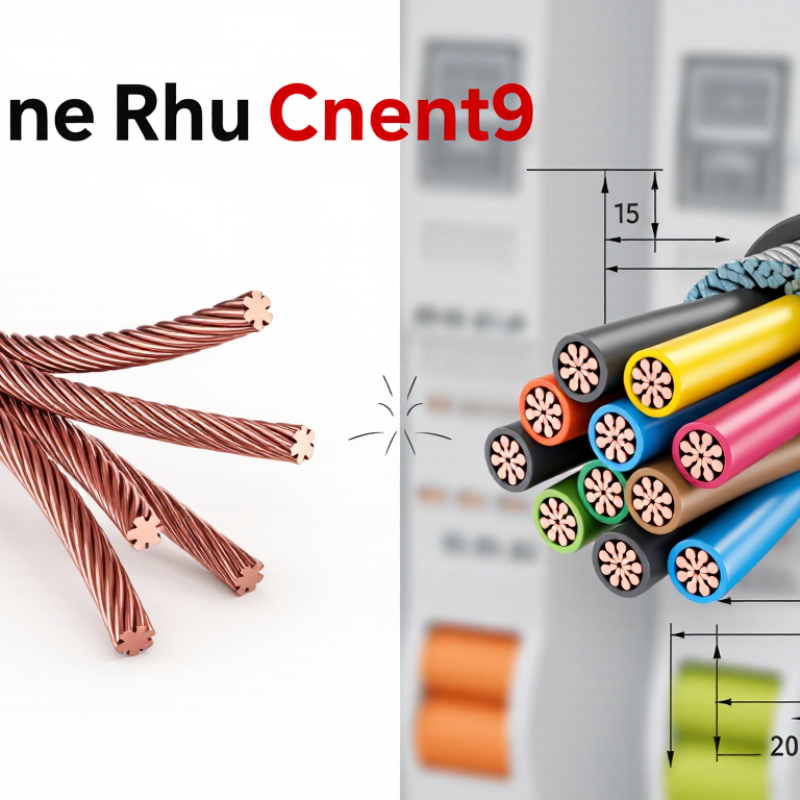
A wire is typically a single electrical conductor, while a cable contains two or more insulated conductors bundled inside an overall protective jacket.

The chart uses a representative comparison: one insulated conductor for wire and a three-conductor jacketed cable. Actual conductor counts, insulation systems, shielding, and protective layers vary by application and standard.

Common Types and Practical Uses of Wires and Cables

What Is the Difference Between Cable and Wire?

In common electrical practice, a wire is one conductor. It may be solid or stranded, copper or aluminum, and insulated or bare. A cable contains two or more insulated conductors, usually covered by an outer jacket. That construction improves organization and protection. However, the boundary is not always tidy. Some single-core cables are still called cables in industrial specifications.

Common wire types serve different tasks. Solid wire suits fixed installations, such as wall switches and control panels. Stranded wire bends more easily, making it useful for machines, vehicles, and flexible connections. Twisted-pair cable carries network signals and reduces electromagnetic interference. Coaxial cable supports radio-frequency signals. Multiconductor power cable feeds motors, buildings, and distribution equipment. Fiber-optic cable carries data through light, not metal conductors. The International Energy Agency reported in Electricity Grids and Secure Energy Transitions that annual grid investment may need to rise from about 600 billion dollars to over 1 trillion dollars by 2030. More grid construction means greater demand for correctly selected conductors and cable systems.

Tips: Check voltage, current, temperature, bend radius, and installation location before choosing. Do not size by appearance alone. A small cable may overheat under continuous load. Field conditions also matter. Moisture, vibration, and tight bends can shorten service life. I sometimes find “universal” cable advice too confident; the equipment manual and local electrical requirements should decide the final selection.

How to Choose Between a Wire and a Cable

What Is the Difference Between Cable and Wire?

How to Choose Between a Wire and a Cable

Choosing between a wire and a cable starts with the load, not appearance. A wire usually contains one conductor with insulation around it. A cable groups two or more insulated conductors inside one outer jacket. If a control panel needs clearly separated connections, individual wires may be easier to trace. For a wall run, a cable can provide cleaner installation and better protection.

Check the required current, voltage, conductor material, and insulation rating. A low-current sensor may need only a small wire. A motor or heating device usually needs larger conductors and stronger insulation. Stranded wire bends easily around tight corners. Solid wire can stay neatly in fixed routes. Wet, hot, oily, or outdoor areas require insulation designed for those conditions. Measure the route before buying. A few extra meters can prevent strained connections.

I often test flexibility by bending a sample along the planned path. It reveals problems that a specification sheet may not show. A thick cable can fit poorly inside a narrow conduit. A small wire can become difficult to manage when many conductors share one space. My first choice is not always right. Once, I selected a compact cable, then found its bend radius unsuitable near the terminal. Check terminal size, installation space, and local electrical requirements. For uncertain or high-power work, ask a qualified electrical professional.

What Is the Difference Between Cable and Wire? – How to Choose Between a Wire and a Cable

Comparison Dimension Wire Cable How This Affects Selection
Basic Definition A wire is generally a single electrical conductor, either solid or made from multiple fine strands. A cable is an assembly containing two or more insulated conductors, or conductors grouped within a common jacket or sheath. Choose a wire for a single-conductor requirement and a cable when several conductors must be installed and protected together.
Conductor Arrangement Usually contains one conductive path. A bare grounding wire may have no insulation. Usually contains multiple individually insulated conductors, sometimes with additional fillers, shields, drain wires, or armor. Use a cable when power, neutral, ground, signal, or control conductors need to travel together.
Insulation and Jacket May be bare, enamel-coated, or covered by one insulating layer such as thermoplastic or rubber. May have insulation around each conductor plus an outer jacket that provides mechanical and environmental protection. Select jacket material according to moisture, oil, chemicals, heat, sunlight, abrasion, and installation conditions.
Number of Electrical Paths Typically one electrical path per wire. Typically two or more electrical paths, although cable construction varies by application. Match the conductor count to the circuit design, including spare, grounding, shield, and control conductors where required.
Flexibility Stranded wire is generally more flexible than solid wire of the same conductor size. Flexibility depends on conductor stranding, conductor count, insulation, jacket thickness, shielding, and bend radius. For repeated movement, choose a product specifically rated for flexing or continuous motion rather than relying only on appearance.
Protection and Durability A single insulated wire has limited protection unless installed inside conduit, raceway, or another enclosure. The outer jacket can provide additional protection against abrasion, moisture, sunlight, mechanical stress, and other hazards. Use cable for exposed or grouped runs when its construction and rating meet the environmental requirements.
Shielding and Noise Control A basic wire normally has no integrated electromagnetic shielding. A cable may include foil or braided shielding, a drain wire, twisted pairs, or other features to reduce electromagnetic interference. For low-level signals, data, audio, or interference-sensitive circuits, select a cable with the appropriate shielding and impedance characteristics.
Typical Applications Internal equipment wiring, grounding, control-panel connections, circuit-board connections, and short point-to-point connections. Building circuits, power distribution, appliance connections, control systems, data transmission, instrumentation, and outdoor installations. Base the choice on the installation method, required conductors, voltage, current, environment, and applicable regulations.
Installation Method Often installed in conduit, cable trays, panels, terminals, or protective enclosures. May be installed directly, in conduit, in trays, underground, within equipment, or in flexible applications when specifically rated. Verify whether the product is permitted for the intended installation method; a general-purpose cable is not automatically suitable for every location.
Voltage and Current Capacity Capacity depends mainly on conductor material, cross-sectional area, insulation temperature rating, installation conditions, and allowable voltage drop. Capacity depends on the size and arrangement of its conductors, insulation temperature rating, grouping, ambient temperature, and installation method. Do not select by conductor size alone; check the applicable ampacity, voltage rating, derating factors, and voltage-drop limits.
Bend Radius A single wire may require less space, but its allowable bend depends on construction and insulation. The minimum bend radius is usually greater because multiple conductors and an outer jacket must bend together. Leave enough routing space and follow the manufacturer’s minimum bend-radius specification.
Space and Organization Can be useful where individual conductors must be routed separately or where space inside a panel is limited. Reduces the number of separate runs and can simplify routing, termination, and maintenance. Choose cable for organized multi-conductor runs, but confirm that its overall diameter fits the available pathway.
Common Conductor Materials Copper and aluminum are common conductor materials; copper generally offers higher conductivity, while aluminum is lighter for a given length. May use copper, aluminum, or other conductive materials depending on the cable’s electrical, weight, and application requirements. Consider conductivity, weight, termination requirements, corrosion protection, cost, and compatibility with connected equipment.
Best Choice When You need one conductor, custom routing, panel wiring, grounding, or a connection inside protected equipment. You need multiple conductors in one protected assembly, integrated shielding, or a defined cable construction for power, control, or communication. Start with the circuit function and installation environment, then compare electrical ratings, mechanical properties, and regulatory approvals.
Selection Checklist: Confirm the conductor count, conductor size, voltage rating, ampacity, insulation temperature, flexibility, minimum bend radius, shielding needs, environmental exposure, installation method, and applicable electrical codes before choosing a wire or cable.