Let Us Know How We Can Help. We Are Your Dedicated Solutions Provider.

Global buyers rarely need the most advanced circuit board. They need the right balance of performance, cost, lead time, and compliance. This guide examines ten widely used board types across consumer electronics, industrial controls, automotive systems, medical devices, and communication equipment.
The comparison begins with single-sided and double-sided boards, which remain practical for simple, cost-sensitive designs. Multilayer boards support dense routing and compact products. Flexible and rigid-flex boards suit hinges, cameras, and wearable devices. HDI boards help reduce product size, but their finer features demand stronger process control. Metal-core boards move heat away from LEDs and power components. Ceramic boards can handle demanding thermal and high-frequency conditions. RF and microwave boards require careful material selection, impedance control, and testing. High-reliability options also serve harsh industrial environments.
Details matter. A supplier may quote the same board type while using different copper weights, laminates, surface finishes, or quality controls. Buyers should review drawings, stack-ups, certifications, sample results, and inspection records before comparing prices. IPC guidance, UL recognition, RoHS requirements, and destination-market rules may affect approval. Requirements still vary by product and region. This article reflects common industry practice, not a substitute for engineering validation. There is no universal winner. Sometimes, a simpler board performs better. That deserves attention.
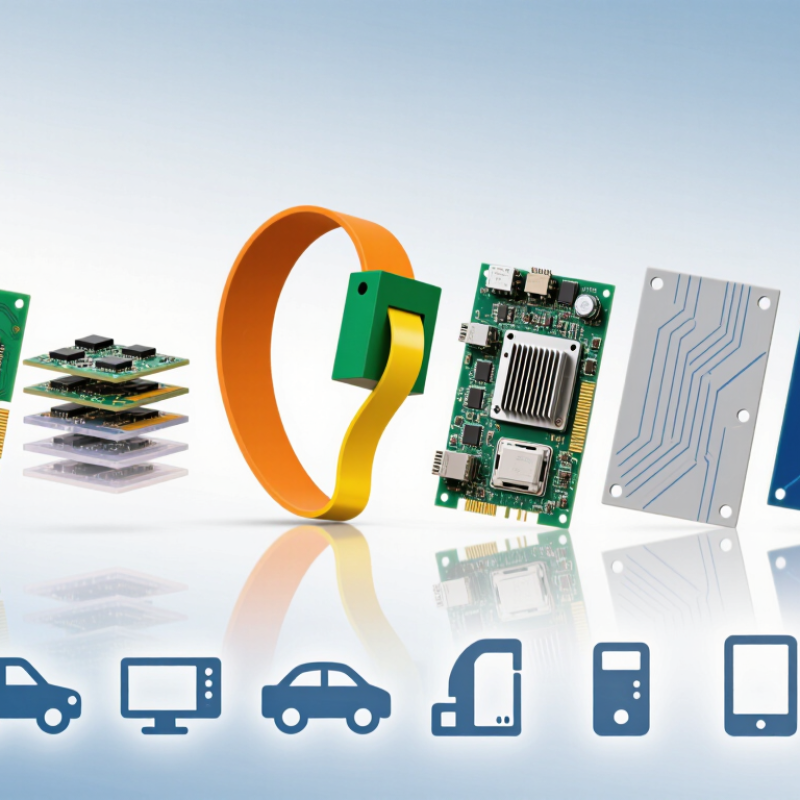
Top 10 Types of Circuit Boards for Global Buyers
A circuit board is the structural and electrical foundation inside many electronic products. It holds components and connects them through patterned copper traces. A rigid board feels like a thin, layered plate, while a flexible board bends like a durable ribbon. During supplier reviews, I check edge quality, hole alignment, surface finish, and documented testing. Small details matter.
The ten common types include single-sided, double-sided, multilayer, rigid, flexible, rigid-flex, metal-core, ceramic, high-density interconnect, and radio-frequency boards. Single-sided boards suit simple circuits with limited routing space. Multilayer boards support dense designs by stacking several copper layers. Flexible boards fit moving parts, while rigid-flex designs combine bending zones with stable mounting areas. Metal-core boards move heat away from high-power components. Ceramic boards handle demanding temperatures and frequencies. High-density interconnect boards use smaller vias and finer traces. Radio-frequency boards require controlled electrical performance.
These boards differ in material, layer count, thickness, flexibility, thermal behavior, and signal requirements. A low-cost rigid board may work well in a basic control panel but fail in a vibrating device. A flexible board may save space yet need careful bend-radius limits. Buyers should match the board to voltage, current, operating temperature, and expected service life. Ask for cross-section data, inspection records, and sample testing. I have learned that a polished sample can hide process variation. That possibility deserves attention.
Circuit boards differ by construction, material, flexibility, layer count, and thermal or high-frequency performance. The chart compares representative commercial design profiles using typical layer counts and board thicknesses. Actual specifications vary by application and manufacturer.
Single-sided and double-sided PCBs are commonly used for simpler electronics, while multilayer, HDI, flexible, rigid-flex, metal-core, ceramic, and RF/microwave boards support higher density, flexibility, thermal management, or signal-frequency requirements.
Global buyers commonly specify ten major circuit board types for different applications. Single-sided boards offer simple routing and lower production costs. Double-sided boards support more components in compact equipment. Multilayer boards manage dense connections inside computers, controllers, and communication devices. Rigid boards provide stable mechanical support for everyday electronics.
Flexible boards bend around hinges, narrow spaces, and moving assemblies. Rigid-flex boards combine firm sections with flexible connections. During supplier reviews, I check bend radius, copper thickness, and connector strain. Small details often decide long-term reliability.
Metal-core boards transfer heat from high-power components to a chassis or heat sink. High-density interconnect boards use fine lines and microvias for compact designs. Ceramic boards handle heat, electrical insulation, and demanding frequency conditions. High-frequency boards support controlled signal performance in wireless and radar equipment.
Material selection requires more than a catalog comparison. A low-cost board may create higher assembly losses later. Moisture absorption, thermal expansion, surface finish, and impedance control need documented checks. Test reports should match the actual production lot, not a general sample. Specifications can still be incomplete. I have seen excellent layouts fail because the enclosure ignored flex movement. Global purchasers should review drawings, inspection records, environmental requirements, and applicable market regulations before approving production.
Materials, layer counts, and manufacturing methods often decide a circuit board’s real value. The 10 common categories include single-sided, double-sided, multilayer, rigid, flexible, rigid-flex, HDI, metal-core, ceramic, and high-frequency boards. Prismark’s 2024 PCB industry review estimated global PCB revenue at approximately US$73 billion in 2024. Demand is moving toward compact, high-density designs.
Standard FR-4 remains popular because glass fiber and epoxy provide balanced cost, strength, and electrical performance. Flexible boards usually use polyimide films, while metal-core boards use aluminum or copper for heat spreading. High-frequency designs may require low-loss laminates. Layer counts can range from two to more than 20. However, more layers do not automatically mean better reliability. I have seen a simpler four-layer structure reduce assembly risk. That assumption needs testing.
Manufacturing methods vary by board type. Multilayer boards require lamination, drilling, copper plating, imaging, and electrical testing. HDI boards commonly add laser microvias and sequential buildup. Flexible boards need tighter control of bending radius and coverlay placement. IPC-2221 and IPC-4101 provide useful design and material guidance, while the IPC 2024 technology roadmap highlights rising demands for fine lines, thermal management, and higher signal speeds.
Tips: Ask for the laminate specification, finished copper thickness, layer stackup, impedance tolerance, and test coverage. Review the supplier’s cross-section report. Do not approve samples by appearance alone. A shiny surface can still hide weak plating or poor registration. Specify operating temperature and bending cycles before requesting quotations.
Choosing among the ten main circuit board types requires more than comparing unit prices. Single-sided boards suit simple controls and low-cost devices. Double-sided boards support moderate routing with fewer layers. Multilayer boards handle dense processors and power systems. Flexible boards bend inside cameras, medical instruments, and compact wearables. Rigid-flex designs reduce connectors in moving assemblies. HDI boards support fine-pitch components. Metal-core boards improve heat transfer in lighting and power products. Ceramic boards tolerate high temperatures and demanding frequencies. RF and microwave boards require controlled impedance. High-Tg boards resist heat during lead-free assembly.
Market data adds useful context. MarketsandMarkets estimates the global PCB market could grow from about 76.9 billion dollars in 2024 to 95.4 billion dollars by 2029. Prismark’s 2024 PCB industry review identifies multilayer boards as the largest revenue segment. These figures show demand, not suitability. A large market share should not decide your design.
Compare operating temperature, signal speed, bending radius, current load, and expected production volume. Ask for impedance data and thermal testing records. Review copper weight, laminate behavior, and drilling limits. Small details matter. A two-layer board may look economical, yet extra wiring and assembly time can erase the saving. I have also seen early supplier quotations change after stack-up review. That is normal, but risky. Treat initial estimates as provisional, and validate prototypes under real electrical and mechanical conditions.
Top 10 Types of Circuit Boards for Global Buyers
Global buyers should evaluate more than board type. Rigid, flexible, rigid-flex, HDI, metal-core, and multilayer boards each need different quality controls. A cheap multilayer board may fail under thermal cycling. A flexible board may need tighter bend-radius testing. I have seen purchase teams compare unit prices while overlooking test fixtures, tooling, and inspection costs.
Quality evidence should include controlled impedance results, microsection records, solderability data, and batch traceability. IPC workmanship classes can help define acceptance levels, especially for demanding applications. The 2023 ISO Survey recorded more than 1.2 million ISO 9001 certificates worldwide. Certification supports confidence, but it does not replace factory audits or sample testing. That distinction is easy to miss.
Tips: Request a recent certificate, capability matrix, and corrective-action report. Check compliance documents for RoHS, REACH, and material traceability. The World Bank’s 2023 Logistics Performance Index highlights customs, infrastructure, tracking, and timeliness as key supply-chain factors. Ask suppliers to show their real lead-time history, not only promised dates. Keep at least one qualified backup source. It may increase short-term cost, but sudden shortages can cost far more. Cost analysis should include freight, duties, yield loss, retesting, and delayed production. No scorecard is perfect. Review it after every shipment.